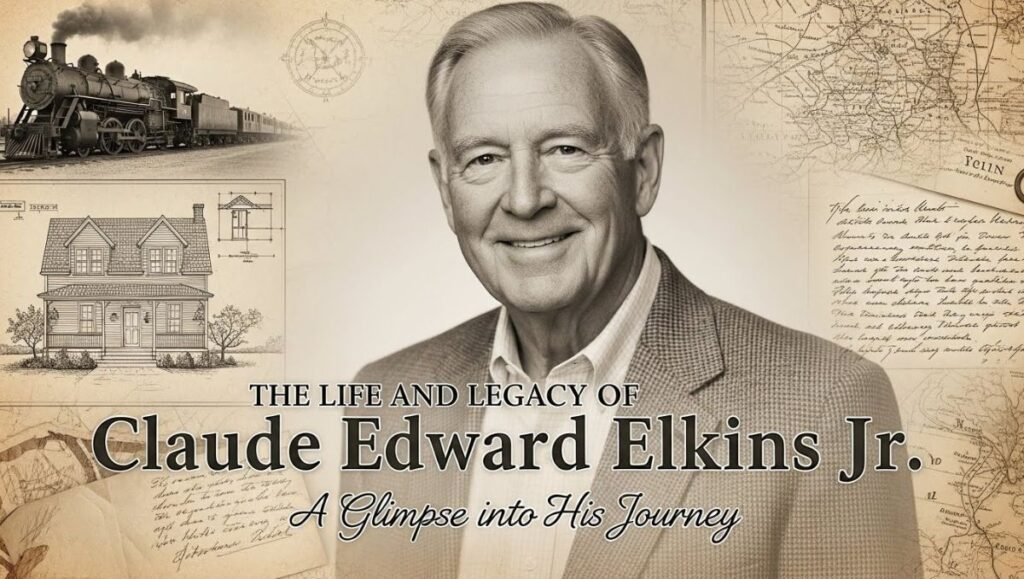

In an industry where executives often arrive from finance or consulting, Claude Edward Elkins Jr. took a different route—one that began in the cab of a locomotive. His progression from brakeman to Executive Vice President and Chief Commercial Officer reflects not only personal ambition, but a broader shift in how railroads value operational fluency as supply chains grow more complex and accountability more visible.
Claude Edward Elkins Jr.’s career matters because it mirrors the modern freight railroad’s central challenge: aligning frontline realities with high-level commercial strategy. At a time when railroads face pressure from shippers, regulators, and labour alike, leaders who understand both the physical movement of freight and the economics behind it are increasingly influential. Elkins’ step-by-step ascent offers a case study in how operational credibility can translate into corporate leadership.
A Career Built From the Ground Up
Claude Edward Elkins Jr.’s professional path is notable not for sudden leaps, but for its deliberate, sequential nature. Each role was built directly on the last, creating a rare continuity between operations and executive decision-making.
His progression followed a clear arc:
- Brakeman
- Conductor
- Locomotive Engineer
- Relief Yardmaster
- Intermodal Marketing Leader
- Vice President of Chemicals Marketing (2016)
- Vice President of Industrial Products (2018)
- Executive Vice President & Chief Commercial Officer (2021–present)
According to industry analysts, such a trajectory is increasingly uncommon in large Class I railroads, where specialization often limits cross-functional movement.
Learning the Railroad the Hard Way
Claude Edward Elkins Jr.’s early years in operating roles placed him at the heart of railroad work.
Operational roles taught fundamentals that later proved strategic:
- Safety compliance under real-world conditions
- Time-sensitive decision-making
- Coordination across crews, dispatchers, and yards
- The physical constraints of rail infrastructure
Experts point out that employees who advance through these roles develop an intuitive understanding of risk and efficiency—knowledge that cannot be replicated in spreadsheets or models alone.
By the time Elkins reached the position of Relief Yardmaster, he had seen the railroad from nearly every operational angle: on the ground, in the cab, and from a supervisory vantage point.
Transitioning From Operations to Markets
The pivot from yard operations to Intermodal Marketing Leader marked a decisive shift.
Intermodal—where rail connects with trucking and ports—is one of the most competitive segments of freight transportation. Success depends on reliability, pricing precision, and coordination across modes.
According to transportation economists, leaders who understand operations are often better positioned to:
- Design realistic service commitments.
- Communicate credibly with shippers.
- Identify bottlenecks before they become failures.
Elkins’ move into marketing signaled a blending of operational insight with customer-facing strategy, a combination that would define the rest of his career.
Vice President of Chemicals Marketing (2016)
Claude Edward Elkins Jr.’s appointment as Vice President of Chemicals Marketing in 2016 placed him in charge of one of railroading’s most sensitive and regulated commodity groups.
Chemical transportation involves:
- Hazardous materials oversight
- Strict regulatory compliance
- Long-term contracts with industrial clients
- High consequences for service disruptions
According to safety analysts, this segment demands leaders who prioritize risk management alongside revenue growth.
Supporters note that Elkins’ operational background strengthened his credibility with both customers and internal safety teams. Critics, however, have pointed out that the chemicals sector exposes railroads to outsized scrutiny, leaving little margin for error.
Broadening Scope: VP of Industrial Products (2018)
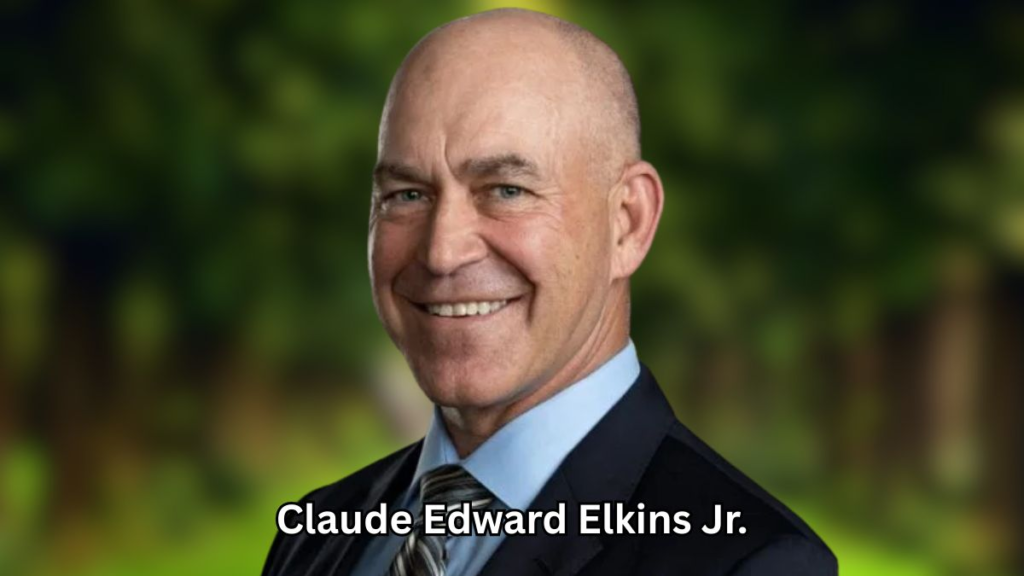
In 2018, Claude Edward Elkins Jr. assumed the role of Vice President of Industrial Products, expanding his portfolio to include a wider array of commodities such as construction materials, metals, and manufacturing inputs.
This role required balancing:
- Cyclical demand patterns
- Infrastructure constraints
- Customer pressure for cost reductions
Data from industry reports suggests that industrial products are among the most volume-sensitive freight categories, rising and falling with broader economic conditions.
Analysts say this period tested Claude Edward Elkins Jr.’s ability to adapt commercial strategy to external forces—trade fluctuations, industrial slowdowns, and shifting customer expectations.
Executive Vice President & Chief Commercial Officer (2021–Present)
Claude Edward Elkins Jr. reached the executive tier in 2021, becoming Executive Vice President and Chief Commercial Officer.
In this role, he oversees:
- Pricing and revenue strategy
- Customer relationships across major sectors
- Long-term commercial planning
The timing of his appointment was significant. The freight rail industry was emerging from pandemic-era disruptions while confronting renewed scrutiny over service reliability and workforce practices.
Experts point out that CCOs today must navigate competing priorities:
- Maintaining margins
- Retaining major shippers
- Responding to regulatory and public pressure
Elkins’ operational credibility, observers say, gives him leverage when aligning commercial commitments with what the railroad can realistically deliver.
Multiple Perspectives on His Leadership
Supporters’ Perspective
Supporters describe Claude Edward Elkins Jr. as a leader who “speaks both languages”—operations and commerce.
They argue that his background:
- Reduces friction between departments
- Improves trust with customers
- Grounds strategic decisions in operational reality
According to one logistics analyst, executives with firsthand rail experience are often more cautious—but also more sustainable—in their growth strategies.
Critical Perspectives
Critics caution that deep operational roots can sometimes limit appetite for transformational change.
They argue that:
- Railroads may need bolder commercial innovation.
- Incrementalism risks losing market share to trucking and logistics firms.
- Cultural continuity can slow adaptation.
These critiques reflect broader debates within the industry rather than concerns unique to Elkins himself.
Broader Implications for the Rail Industry
Claude Edward Elkins Jr.s rise highlights a shift in how railroads define leadership readiness.
Historically, executive roles were often filled by individuals with financial or legal backgrounds. Today, according to workforce studies, companies increasingly value leaders who can connect strategy to execution.
This shift carries consequences:
- Greater emphasis on service reliability
- Increased attention to operational feasibility
- More integrated planning between marketing and operations
For shippers, this can mean clearer communication. For employees, it can signal that operational experience still matters in an era of automation and analytics.
What the Future May Hold
Short-term outlook:
- Continued focus on pricing discipline
- Refinement of service commitments
- Managing customer expectations amid network constraints
Long-term outlook:
- Greater integration of data-driven forecasting
- Potential shifts in commodity mix
- Ongoing tension between efficiency and resilience
Experts suggest that leaders like Claude Edward Elkins Jr. will be judged less by bold announcements and more by consistency—whether promised service aligns with actual performance.
Conclusion: A Career That Reflects the Rails Themselves
Claude Edward Elkins Jr.’s journey—from Brakeman to Executive Vice President and Chief Commercial Officer—offers more than a résumé highlight. It reflects how modern railroads grapple with complexity, accountability, and change.
His story underscores a broader question facing the industry: can leaders shaped by the physical realities of railroading guide it through an increasingly abstract, data-driven future? The answer may determine not just individual careers, but how effectively railroads continue to serve as a backbone of the global economy.
You might also like: