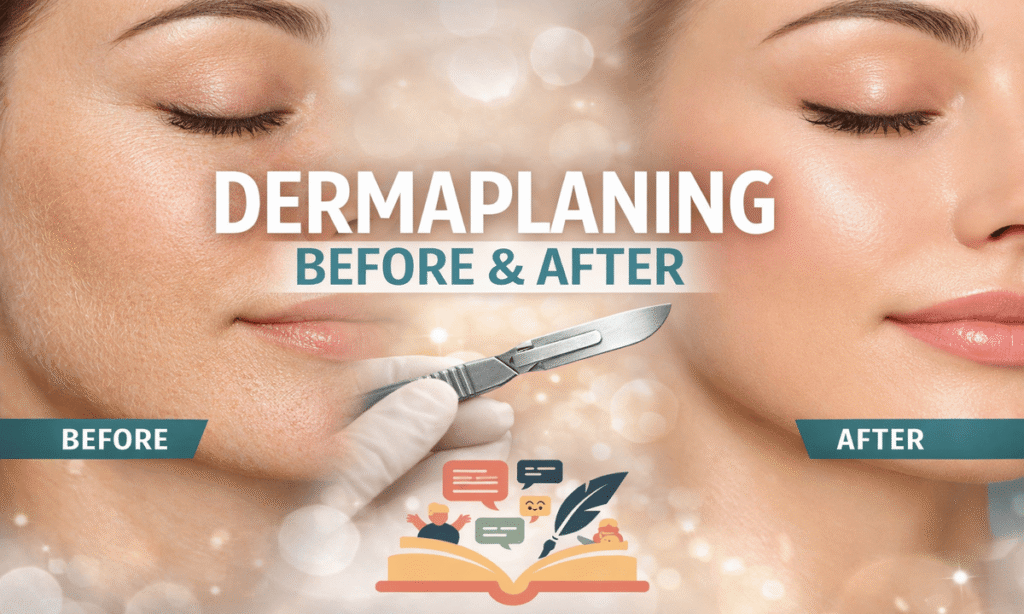

Scroll through social media or flip through a beauty magazine today, and chances are you’ll encounter dramatic “before and after” images tied to dermaplaning. The treatment promises smoother skin, brighter tone, and a flawless makeup canvas instantly. Yet behind the striking visuals lies a procedure with a longer medical history, growing scientific scrutiny, and an expanding audience weighing its benefits against its risks.
Dermaplaning’s resurgence reflects broader shifts in how consumers approach skincare—favoring visible, immediate results and professional-grade treatments adapted for home use. As demand grows, so do questions about safety, effectiveness, and what Dermaplaning Before and after look like. Understanding dermaplaning’s before-and-after impact has become essential for consumers navigating an increasingly crowded beauty landscape.
What Is Dermaplaning?
Dermaplaning is a form of physical exfoliation that uses a sterile, surgical-style blade to gently scrape away dead skin cells and fine facial hair—commonly known as vellus hair or “peach fuzz.” The process is performed at a 45-degree angle, typically on clean, dry skin.
Unlike chemical exfoliants, dermaplaning does not rely on acids or enzymes. Instead, it removes surface-level debris mechanically, revealing fresher skin underneath.
A Brief Historical Context
Dermaplaning is not a modern invention. Dermatologists began using the technique decades ago as a preparatory step before chemical peels or laser treatments. By removing the top layer of dead skin, clinicians found that follow-up treatments could penetrate more evenly.
Its migration into mainstream beauty culture accelerated in the 2010s, driven by:
- The rise of high-definition makeup and photography
- Social media demonstrations showing immediate results
- Increased consumer comfort with at-home skincare tools
According to industry analysts, the global exfoliation tools market has grown steadily over the past decade, with dermaplaning devices now occupying a significant share.
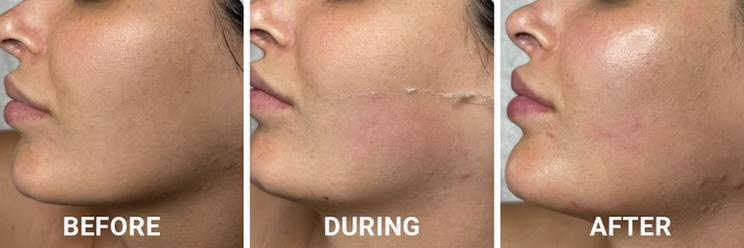
Dermaplaning Before and After
The “Before”: Who Typically Seeks Dermaplaning?
Before dermaplaning, patients or users often share similar concerns:
- Dull or uneven skin texture
- Fine facial hair is interfering with makeup application.
- Mild surface dryness or flakiness
- A desire for instant, non-invasive results
Dermatologists note that dermaplaning is most commonly sought by people with normal to dry skin, though it is sometimes used cautiously on combination skin.
Who Should Be Careful
Experts consistently caution that dermaplaning is not ideal for everyone. Individuals with active acne, rosacea, eczema, or highly sensitive skin may experience irritation or flare-ups.
According to dermatology associations, the “before” assessment is critical. Skin condition, hair growth patterns, and existing treatments all influence whether dermaplaning is appropriate.
The Procedure: What Happens During Dermaplaning
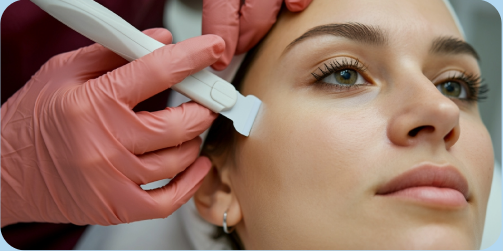
Whether performed in a clinic or at home, dermaplaning follows a relatively consistent sequence:
- Skin is thoroughly cleansed and dried.
- A sterile blade is held at a precise angle.
- Short, feather-light strokes remove dead skin and hair.
- Calming serums or moisturizers are applied afterward.
In professional settings, the treatment typically lasts 20 to 30 minutes. At-home versions are often quicker but carry a higher risk if performed improperly.
The “After”: Immediate Results and Visible Changes
The most talked-about aspect of dermaplaning is the “after”—often described as instantly noticeable.
Common Immediate Effects
- Smoother skin texture
- Enhanced brightness due to light reflecting more evenly
- Improved makeup application, especially foundation
- A temporary “glass skin” appearance
According to skincare specialists, these effects stem from the removal of the stratum corneum’s outermost layer, which can trap oil and dead cells.
What the Data Suggests
While large-scale clinical trials are limited, smaller dermatological studies on mechanical exfoliation indicate:
- Increased absorption of topical products post-treatment
- Temporary improvement in surface roughness
- No change in hair thickness or growth rate
Contrary to popular myth, dermaplaning does not cause hair to grow back darker or coarser, experts emphasize. Hair regrowth follows its natural cycle and structure.
Short-Term vs. Long-Term Outcomes
Short-Term (Days to One Week)
- Skin may feel softer and appear more radiant.
- Increased sensitivity to sun exposure
- Higher risk of irritation if harsh products are used
Dermatologists often recommend avoiding retinoids and acids for several days after treatment.
Long-Term (Weeks to Months)
With regular professional dermaplaning—typically every 3 to 4 weeks—some users report:
- More consistent skin texture
- Reduced the appearance of surface dryness
- Improved confidence in makeup-free skin
However, experts stress that dermaplaning does not alter deeper skin issues such as hyperpigmentation, deep wrinkles, or acne scarring.
Professional vs. At-Home Dermaplaning
The explosion of at-home dermaplaning tools has reshaped the conversation around safety and results.
Professional Treatments
Advantages:
- Performed by trained practitioners
- Use of medical-grade tools
- Lower risk of cuts or infection
Drawbacks:
- Higher cost
- Requires scheduling and repeat visits
At-Home Tools
Advantages:
- Affordable and convenient
- Allows frequent maintenance
Risks:
- Improper technique can cause micro-cuts
- Reusing blades increases infection risk.
- Overuse may compromise the skin barrier.
According to dermatology experts, most adverse reactions linked to dermaplaning come from unsupervised at-home use.
Critics and Concerns
Not all skincare professionals are enthusiastic supporters.
Some critics argue that:
- Over-exfoliation is increasingly common.
- Results are largely cosmetic and short-lived.
- Marketing exaggerates long-term benefits.
“There’s a tendency to mistake instant smoothness for skin health,” one dermatologist noted in a recent industry panel. The concern is that frequent exfoliation—mechanical or chemical—may weaken the skin’s natural protective barrier.
Real-World Case Examples
Case 1: The Makeup Artist’s Tool
Professional makeup artists often use dermaplaning as a prep step before high-profile events. According to industry insiders, clients frequently request the treatment before weddings or photo shoots, citing smoother foundation application and fewer visible pores on camera.
Case 2: The Cautious Convert
Some first-time users report mixed outcomes. While initially impressed by the glow, a subset experience redness or breakouts days later—often linked to inadequate aftercare or pre-existing sensitivity.
These varied experiences underscore the importance of individualized assessment rather than one-size-fits-all solutions.
Broader Implications in the Beauty Industry
Dermaplaning’s popularity reflects a larger trend toward procedural skincare—treatments that sit between traditional facials and medical interventions.
According to beauty market analysts:
- Consumers increasingly prioritize treatments with visible, immediate payoff.
- Social proof via before-and-after imagery plays a decisive role.
- Education gaps remain around proper technique and limitations.
This shift has prompted calls for clearer guidelines and consumer education, especially as tools become more accessible.
What Comes Next: The Future of Dermaplaning
Short-Term Outlook
- Continued growth in at-home dermaplaning tools
- More dermatologist-led education campaigns
- Increased emphasis on post-treatment skin barrier repair
Long-Term Outlook
Experts predict that dermaplaning will remain popular but become more regulated within professional settings. Innovations may focus on:
- Hybrid tools combining exfoliation with calming technologies
- Personalized treatment intervals based on skin type
- Better clinical research into cumulative effects
As skincare consumers become more informed, demand may shift from dramatic “after” photos to evidence-backed outcomes.
Conclusion: Beyond the Before and After
Dermaplaning’s appeal lies in its immediacy—the visible transformation from before to after can feel both satisfying and empowering. Yet its true value depends on context: skin type, technique, frequency, and expectations.
In the broader conversation about beauty and skin health, dermaplaning serves as a reminder that visible results are only one part of the equation. As experts continue to study and refine its use, the question remains not whether dermaplaning works—but for whom, how often, and at what cost to the skin’s long-term balance.
You might also like:
beauty


