

When Miley Cyrus stepped onto the red carpet last year with a sharper jawline and a more sculpted silhouette, social media lit up with familiar questions. Had she “had work done”? The speculation wasn’t new, but its intensity reflected a broader moment—one where celebrity aging, cosmetic medicine, and public expectations collide in increasingly visible ways.
Discussion around “Miley Cyrus plastic surgery” has surged alongside her artistic reinvention and high-profile appearances. Yet the conversation says as much about public assumptions and evolving beauty standards as it does about any specific procedure. For readers, the topic matters because it highlights how fame, gender, and medical aesthetics intersect—and how little certainty often exists behind confident online claims.
A Career Lived in Public View
Miley Cyrus is not a celebrity who arrived fully formed. She grew up on camera.
From her early days as Disney’s Hannah Montana to her genre-shifting adult career, Cyrus has spent nearly two decades under constant scrutiny. Each stage—teen idol, provocateur, rock-influenced pop star—has brought changes in style, body, and presentation.
Experts note that when stars age in public, normal physical changes are often mistaken for artificial intervention. Weight shifts, muscle tone, facial maturation, and styling can dramatically change appearance without surgery.
In Cyrus’s case, the transformation has been gradual, not abrupt—a key detail often overlooked in viral comparisons.
Miley Cyrus Plastic Surgery: What Is Actually Being Claimed?
Online speculation typically focuses on a small set of alleged procedures. The most frequently mentioned include:
- Rhinoplasty (nose reshaping)
- Buccal fat removal
- Jawline contouring or fillers
- Lip augmentation
- Botox or skin-tightening treatments
It is important to note that Cyrus has not publicly confirmed undergoing plastic surgery. While she has spoken openly about body image, sobriety, and mental health, she has largely avoided discussing cosmetic procedures directly.
According to board-certified plastic surgeons interviewed in mainstream media, none of these procedures can be conclusively identified from photographs alone. Lighting, camera lenses, facial expressions, makeup techniques, and weight loss can all mimic surgical outcomes.
The Buccal Fat Debate and Changing Facial Aesthetics
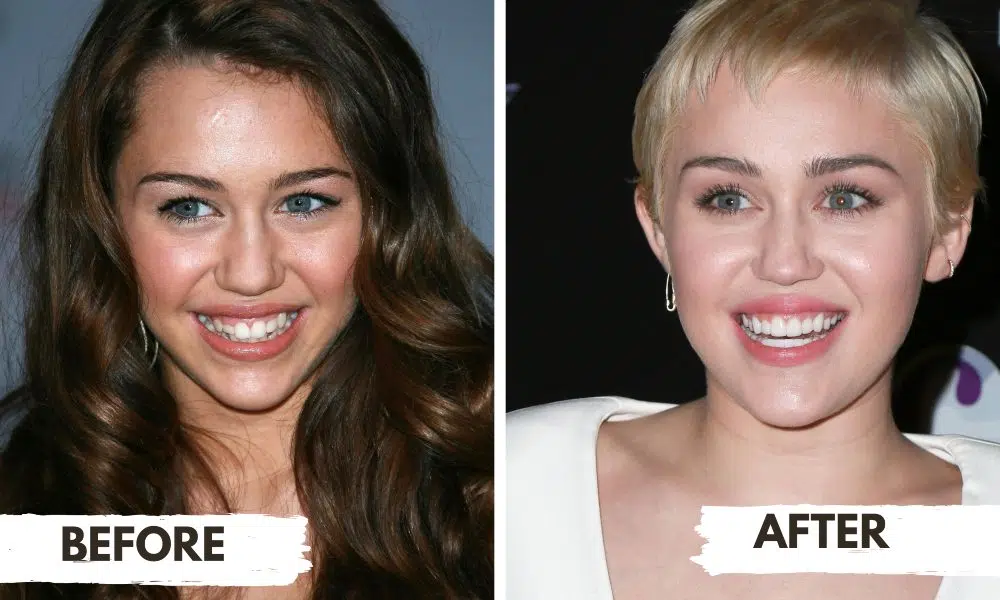
One of the most persistent rumors surrounding Cyrus involves buccal fat removal—a procedure that reduces cheek fullness to create a more angular face.
Why the rumor gained traction
- Cyrus’s face appears leaner than in her early 20s
- High-fashion styling emphasizes bone structure.
- The trend itself has surged among celebrities and influencers.
However, dermatologists and facial plastic surgeons caution against assuming cause from effect.
“Facial fat naturally decreases with age, especially after 30,” one New York-based cosmetic surgeon told Allure. “Weight loss, diet, and muscle definition can produce dramatic changes without surgery.”
Cyrus’s documented weight changes, fitness routines, and vegan diet provide plausible non-surgical explanations for a slimmer face.
Makeup, Styling, and the Illusion of Surgery
Professional stylists play a significant role in shaping celebrity appearances.
Over the past five years, Cyrus has worked closely with high-fashion teams that favor:
- Bleached brows and minimal eye makeup
- Strong contouring and highlight placement
- Slicked-back hair emphasizing facial structure.
These choices align with runway aesthetics but also accentuate angles that didn’t dominate her earlier, softer looks.
Makeup artists note that modern contouring techniques can visually alter:
- Nose width
- Jawline definition
- Cheek prominence
In still images, these effects can resemble cosmetic work—especially when paired with high-resolution photography.
The Role of Non-Surgical Enhancements
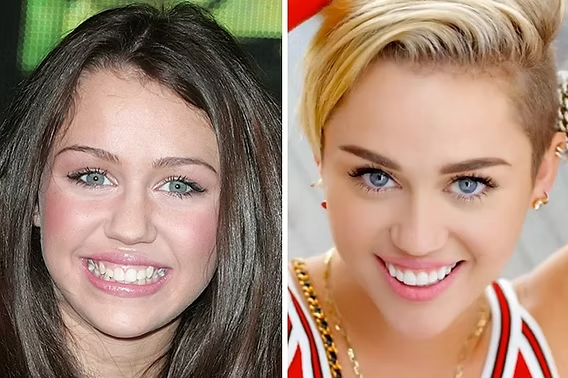
If there is one area where experts are more comfortable speculating, it is non-invasive cosmetic treatments, now common among public figures.
These may include:
- Botox for the forehead and eye areas
- Dermal fillers for symmetry or volume balance
- Laser resurfacing for skin texture
According to data from the American Society of Plastic Surgeons, minimally invasive procedures now outnumber surgical ones by more than 10 to 1.
Crucially, these treatments are:
- Temporary
- Subtle when conservatively applied
- Increasingly normalized in entertainment industries
Analysts argue that assuming cosmetic intervention no longer implies drastic alteration—just maintenance within a competitive visual economy.
Public Reaction: Praise, Criticism, and Cultural Tension
Audience response to Cyrus’s evolving look has been sharply divided.
Supporters argue:
- She appears confident and self-possessed.
- Her look aligns with artistic reinvention.
- Women should not be policed for appearance changes.
Critics contend:
- She reinforces unrealistic beauty standards.
- The changes feel “manufactured” or trend-driven
- Transparency matters in influencer culture.
This tension mirrors broader cultural debates about authenticity, feminism, and cosmetic medicine.
Younger fans, in particular, navigate a paradox: encouraged to embrace body positivity while absorbing hyper-curated celebrity images shaped by wealth and access.
Why Female Celebrities Face Disproportionate Scrutiny
Comparisons to male counterparts are revealing.
When male artists age, weight changes, or facial lines are often framed as maturity or gravitas. For women, similar changes trigger speculation—either of neglect or artificial enhancement.
Media studies researchers note that:
- Women’s faces are treated as public property.
- Aging is framed as a problem to solve
- Cosmetic intervention is judged whether confirmed or not.
Cyrus’s case fits a long-standing pattern seen with Madonna, Jennifer Aniston, and countless others.
Legal and Ethical Boundaries of Speculation
While public interest is inevitable, there are ethical limits.
Medical professionals emphasize that speculating about specific procedures without confirmation risks misinformation. It can also contribute to distorted expectations around what surgery can realistically achieve.
From a journalistic standpoint, responsible coverage focuses on:
- Context, not certainty
- Expert analysis, not viral claims
- Cultural impact, not personal judgment
This distinction matters in an era where cosmetic procedures are discussed casually but understood unevenly.
What the Data Suggests About Celebrity Influence
Studies on cosmetic medicine trends consistently show spikes following high-profile celebrity moments.
According to recent industry reports:
- Searches for facial contouring increase after major award shows
- Younger patients increasingly request “celebrity-inspired” features.
- Social media accelerates comparison-driven decision-making.
Cyrus, whether intentionally or not, becomes part of this feedback loop—her image influencing trends even amid uncertainty about its origins.
What Happens Next?
Short-term outlook
- Continued speculation tied to public appearances
- Media comparisons during tours and award seasons
- Ongoing commentary driven by social platforms
Long-term implications
- Greater normalization of aesthetic maintenance
- Potential pushback against invasive beauty standards
- Increased demand for transparency—or privacy—around cosmetic choices
Experts predict that as audiences become more visually literate, the binary of “natural vs. fake” may lose relevance, replaced by more nuanced conversations about choice and context.
Conclusion: Beyond the Procedure Question
The debate over Miley Cyrus plastic surgery ultimately reveals more about the culture observing her than about her face itself.
In an age where appearance is endlessly documented and dissected, certainty is rare—but assumptions are plentiful. Whether Cyrus has had cosmetic work, non-invasive treatments, or none at all remains secondary to the larger issue: why we feel entitled to know, and what we do with that knowledge.
As beauty standards evolve and celebrity transparency becomes selectively demanded, the question may not be what changes next for Miley Cyrus—but whether audiences are ready to change how they look at women in the public eye.
You might also like:


