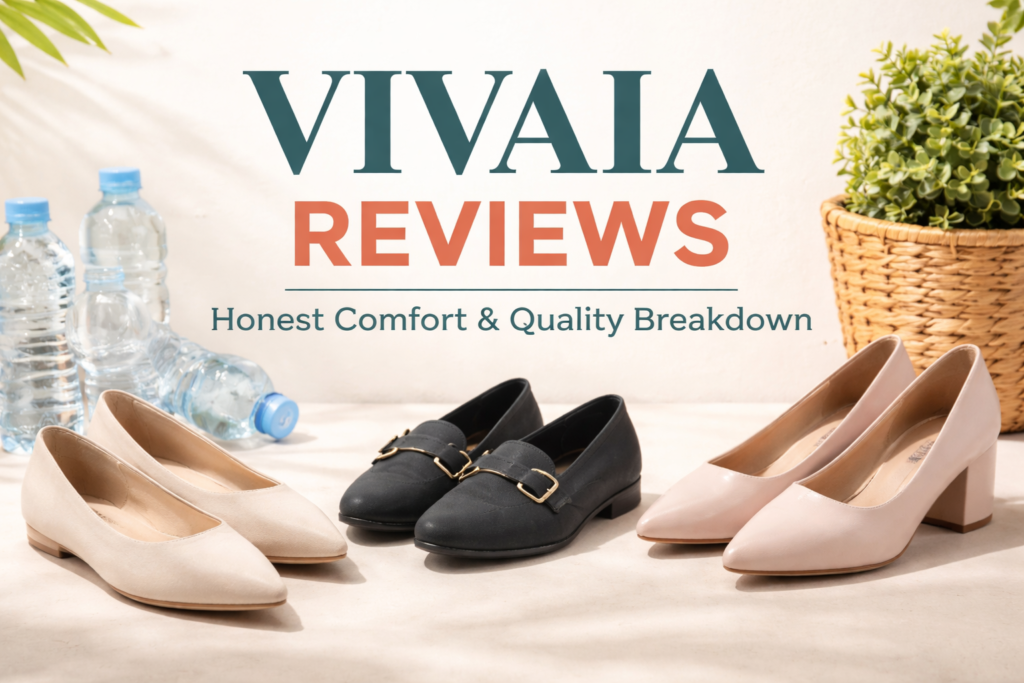

VIVAIA Reviews, If you’ve spent any time scrolling Instagram, Pinterest, or Google shopping results, chances are you’ve seen VIVAIA shoes pop up—usually paired with words like sustainable, comfortable, and work-friendly.
But let’s be honest.
Plenty of brands sound good online. That doesn’t mean they hold up after 10,000 steps and a full workday.
So today, we’re doing what real shoppers want:
A no-fluff, real-world VIVAIA review.
Let’s break this down properly.
What Is VIVAIA? (Quick Brand Overview)

VIVAIA is a footwear brand best known for its:
- Eco-friendly materials
- Machine-washable shoes
- Stylish flats, loafers, and heels
- Focus on all-day comfort
Founded with sustainability in mind, VIVAIA uses recycled plastic bottles to create its signature knit uppers—an approach that’s helped the brand gain global attention.
Quick fact:
Most VIVAIA shoes use 6–12 recycled plastic bottles per pair.
That’s not just marketing—it’s a real environmental shift.
Why Are VIVAIA Reviews Everywhere?
There are three main reasons VIVAIA reviews have exploded online:
- Comfort claims (no break-in period)
- Eco-conscious branding (recycled, low-waste production)
- Stylish workwear shoes that don’t look orthopedic
But hype alone doesn’t pay the bills—or prevent blisters.
So let’s look deeper.
VIVAIA Shoes Materials & Sustainability
What Are VIVAIA Shoes Made Of?
Here’s where VIVAIA genuinely stands out.
Core materials include:
- Recycled PET plastic yarn (from water bottles)
- Natural rubber outsoles
- Cushioned, breathable insoles
- Water-repellent knit uppers
Why this matters:
The knit construction allows shoes to flex naturally with your foot—reducing pressure points and hot spots.
Quick tip:
If you hate stiff shoes, this flexible knit is a big win.
Is VIVAIA Actually Sustainable?
Short answer: Yes, more than most.
VIVAIA focuses on:
- Reduced carbon emissions
- Minimal waste production
- Long-lasting designs (less fast fashion)
While no brand is perfectly sustainable, VIVAIA clearly puts effort where many competitors don’t.
Comfort Test: Real-World Wear Experience
This is where most VIVAIA reviews either win or lose readers.
Are VIVAIA Shoes Comfortable for All-Day Wear?
For most people: Yes.
Here’s what consistently shows up in real customer feedback:
- Soft, cushioned insoles
- Good arch support (for flats)
- No painful break-in period
- Lightweight feel even after hours of walking
They’re especially popular with:
- Office workers
- Teachers
- Travelers
- Anyone on their feet all day
Light humor moment:
These are the kind of shoes you forget you’re wearing—until someone compliments them.
What About Foot Issues?
VIVAIA shoes work well for:
- Mild plantar fasciitis
- Sensitive feet
- Bunions (thanks to stretch knit)
However, if you need medical-grade orthotics, you may still want inserts.
Fit & Sizing: Do VIVAIA Shoes Run True to Size?
General Fit Guidance
Most VIVAIA reviews agree:
- True to size for standard feet
- Slightly snug at first (knit relaxes after wear)
Wide Feet? Narrow Feet?
- Wide feet: Usually comfortable due to stretch
- Narrow feet: Some styles may feel roomy
Pro tip:
Check individual product reviews—some models fit differently than others.
Popular VIVAIA Styles Reviewed
1. VIVAIA Flats (Pointed & Round Toe)
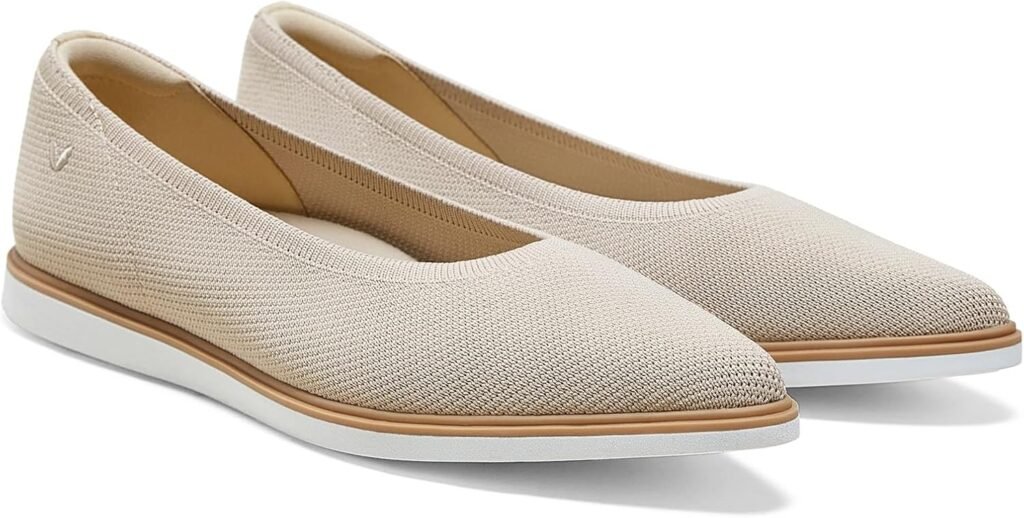
Best for:
- Office wear
- Business casual outfits
Pros:
- Elegant design
- Breathable knit
- No toe pinching
Cons:
- Limited cushioning for long city walks
2. VIVAIA Loafers
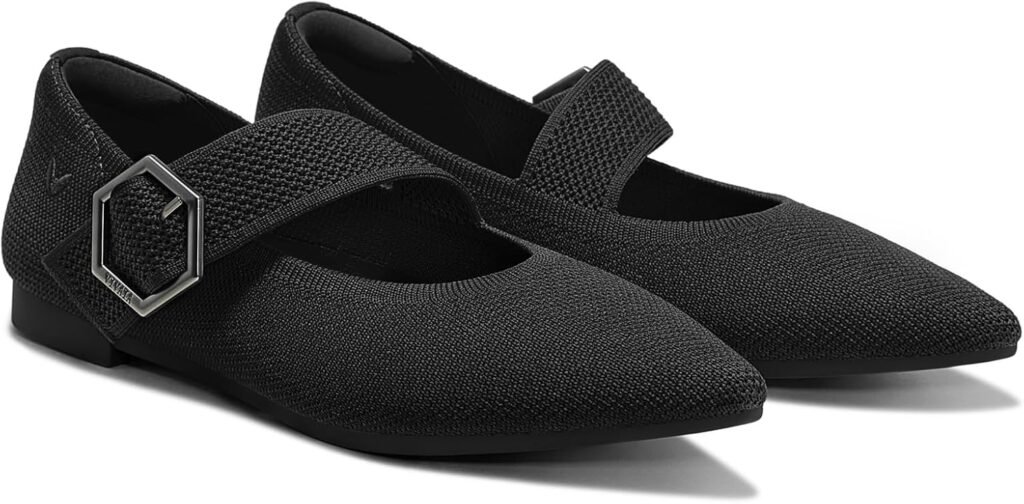
Best for:
- Daily workwear
- Travel
Pros:
- Excellent stability
- Polished look
- Comfortable for long hours
Cons:
- Slightly heavier than flats
3. VIVAIA Heels
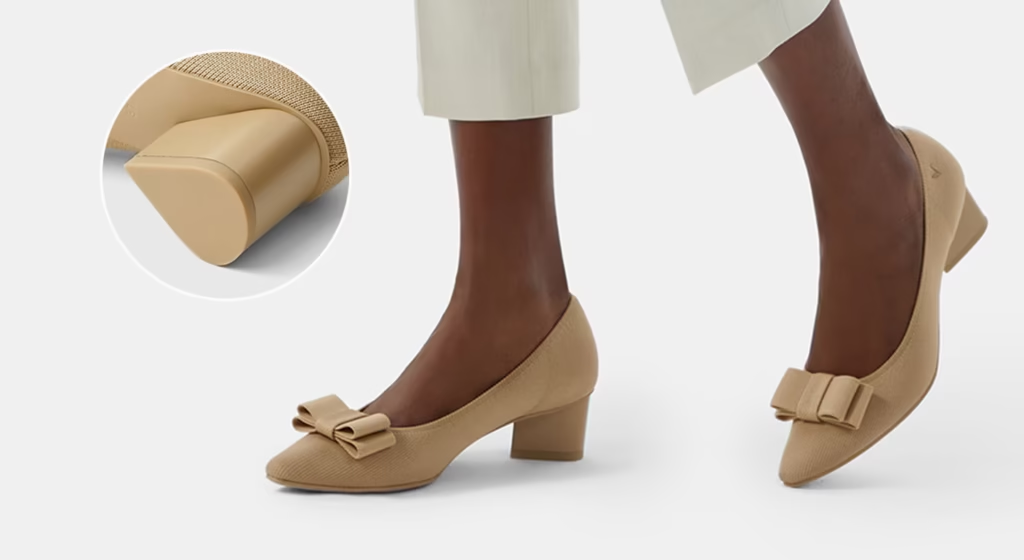
Yes—comfortable heels do exist.
Pros:
- Shock-absorbing insoles
- Better balance than traditional heels
Cons:
- Not ideal for uneven terrain
Durability: Do VIVAIA Shoes Last?
This is where skepticism usually kicks in.
Based on long-term VIVAIA reviews:
- Most shoes last 12–18 months with regular wear
- Knit uppers resist cracking and peeling
- Soles hold up well for urban use
Not recommended for:
- Heavy hiking
- Rough outdoor terrain
Machine Washable: Gimmick or Game-Changer?
Surprisingly—it works.
How to wash VIVAIA shoes:
- Remove insoles
- Place shoes in a laundry bag
- Cold wash, gentle cycle
- Air dry only
Result?
- Shoes regain shape
- No lingering odor
- Color stays intact
This alone converts many first-time buyers into repeat customers.
Pros and Cons of VIVAIA Shoes
Pros
- Sustainable materials
- Stylish yet practical
- Comfortable for long hours
- Machine washable
- Breathable knit design
Cons
- Premium price point
- Limited athletic use
- Some styles sell out quickly
Price: Are VIVAIA Shoes Worth the Cost?
VIVAIA shoes typically range from $97–$149.
They’re not cheap—but they’re also not fast fashion.
What you’re paying for:
- Sustainability
- Comfort engineering
- Versatility
Compared to buying multiple cheap shoes per year, many users find VIVAIA more cost-effective long term.
Expert Insight: Why Knit Footwear Is Trending
Footwear specialists increasingly favor knit uppers because they:
- Reduce pressure points
- Adapt to foot movement
- Improve breathability
VIVAIA’s design aligns with these modern footwear principles—without sacrificing style.
FAQs
1. Are VIVAIA shoes good for walking all day?
Yes, especially flats and loafers. Many users wear them for 8–10 hours comfortably.
2. Do VIVAIA shoes stretch over time?
Slightly. The knit relaxes naturally after a few wears.
3. Can I wear VIVAIA shoes without socks?
Absolutely. They’re designed to be breathable and odor-resistant.
4. Are VIVAIA shoes good for travel?
Yes. Lightweight, packable, and versatile—great for city trips.
5. How long do VIVAIA shoes last?
With regular use, most pairs last over a year.
6. Are VIVAIA shoes truly eco-friendly?
They’re among the more transparent and responsible shoe brands on the market.
7. Do they offer returns or exchanges?
Yes, VIVAIA has a customer-friendly return policy (check region-specific terms).
Conclusion
If you’re looking for:
- Stylish everyday shoes
- Real comfort without break-in pain
- A more sustainable wardrobe choice
VIVAIA is absolutely worth considering.
They’re not designed for rugged adventures—but for daily life, work, travel, and comfort?
They shine.
Quick tip: Start with one pair (flats or loafers), test them in your daily routine, and build from there.
Your feet—and the planet—might thank you.


